Saturday, July 7, 2012

Is Death Bad or Just Less Good? (Part One)


I’ve been thinking about death a lot recently. And also immortality. I’m trying to figure out whether one should be indifferent to death or afraid of it, in favour of immortality or against it, or some other combination of views. Consequently, I’ve been reading quite a number of papers on the topics of death and immortality and generally getting overwhelmed by the amount of material that is out there. Nevertheless, I thought I might share some of the insights from a couple of the papers I have read here on the blog.

I start today by looking at Aaron Smuts’s recently published paper “Less Good But not Bad: In Defence of Epicureanism about Death”. This paper is just the latest in the longstanding philosophical debate over the Epicurean attitude to death. Famously, Epicurus argued that death cannot be bad for the person who dies, since they do not experience their state of non-being.

This is a counter-intuitive view. Most people subscribe to the Harm Thesis, which holds that death is indeed harmful to the person who dies, and it seems that they are right to do so. After all, many of our commonsense moral beliefs — foremost among them being the belief that killing is wrong — seem to flow from the harm thesis.

At the same time, the Epicurean view that death is not associated with any painful or harmful experiences looks reasonable enough. So in defending the Harm Thesis appeal must be made to something other than how death feels in order to explain why it is bad for the person who dies. To this end, many philosophers defend the Deprivation Thesis:

Deprivation Thesis: Life is intrinsically good because it is associated with enjoyable and pleasant experiences. The state of non-being (death) is intrinsically bad because it deprives you of those states.

We’ll be going through some slightly more careful formulations of the deprivation thesis later in this series, so don’t get too wedded to this one right now. All that matters for now is the general form of the deprivation thesis, which is a form that depends on a counterfactual claim, viz. death is bad because continued life would have been better. The defender of the Epicurean view, like Smuts, must offer some refutation of the deprivation thesis. This is exactly what he does and in this series we’ll be following his argument closely.

The series will be broken into a number of different parts. This first part introduces the basic Epicurean argument that Smuts endorses, and gives a rough overall defence of its key premises. As we shall see, Smuts excludes certain controversial premises from his analysis and focuses instead on the premise that directly challenges the deprivation thesis. Subsequent posts will look at the arguments from defenders of the deprivation thesis and Smuts’s responses thereto.


1. The Dead End Argument
Smuts defends a brand of Epicureanism he calls innocuousism, which may be the most awkwardly titled philosophical thesis I have ever come across. According to innocuousism, death is not prudentially bad for the person that dies. This is to be distinguished from another view, one we might call fearlessness, which holds that death is not to be feared because it is not bad. Fearlessness is sometimes associated with Epicurean view, but it is worth keeping it distinct from innocuousism. Innocuousism might provide some support for fearlessness, but it is primarily a thesis about (prudential) value, not about how we ought to feel.

This is the argument that Smuts uses to support innocuousism. He calls it the Dead End Argument (DEA) because it holds that death is not bad because it leads to an experiential dead end. As follows:


  • (1) The only thing that bears intrinsic prudential value is an experiential mental state (mental statism).
  • (2) Being dead is (at least partly) constituted by the complete absence of experiential mental states, i.e. being dead is an experiential blank. 
  • (3) Therefore, the state of being dead is not intrinsically prudentially bad. 
  • (4) An event is extrinsically bad if and only if it leads to intrinsically bad states of affairs (the causal hypothesis). 
  • (5) Therefore, death (which is an event) is not extrinsically bad. 
  • (6) An event is only prudentially bad for someone if it is intrinsically or extrinsically prudentially bad. 
  • (7) Therefore, death is not prudentially bad for the person who dies.


This argument depends on a number of controversial premises. The first being the claim that only experiential mental states can be bearers of intrinsic value. The second being the claim that death is an experiential blank. And the third being the causal hypothesis that X is extrinsically bad if and only if X leads to something that is intrinsically bad. Smuts’s article is primarily a defence of the causal hypothesis, but we’ll briefly consider the other premises below.

Before we do that though it’s worth pausing to consider the significance of the word “prudential” in this argument. That which is prudentially bad/good must be distinguished from that which is morally bad/good. Prudential bad/good has to do with what is good or bad for the person making the decision. Moral bad/good may (or may not) be judged against impersonal standards. A person who selflessly dedicates themselves to charity work may live a life that is morally very good — judged against impersonal standards — but that is a misery to them personally. So the argument being made here is about what the person should value, not what is valuable for others or from an impersonal point of view.


2. Are Mental States the only bearers of Intrinsic Value?
The first premise of the DEA claims that experiential mental states are the only bearers of intrinsic prudential value. This might seem reasonable but Smuts notes that it is disputed by defenders of Nozick’s Experience Machine Argument (EMA). I discussed this in some detail in a podcast last year. The argument presents us with a thought experiment involving a super-powerful virtual reality machine that can accurately replicate any experience we might wish to have, including the most pleasurable and desirable ones. We are then asked whether we prefer experiencing those states in the machine or experiencing them in reality?

Intuitions vary, and exactly how the choice is framed can make a difference, but the general view is that reality is to be preferred over the experience machine. What are the implications of this? It might be tempting to say that the EMA shows that experiential mental states are not only thing that can bear prudential value. But I’m not sure that’s the correct interpretation. It seems to me like the EMA might prove that experiential mental states are insufficient for value, but they might nevertheless be necessary.

More pertinent to the present discussion is the fact that the EMA, as Smuts points out, does nothing to show that the absence of experiential mental states is harmful? The EMA may well show that something more than mere positive mental experience is needed in order for something to be prudentially valuable, but it does not show that the complete absence of mental experience is prudentially harmful. Since it is the latter that concerns us here, it looks like we have nothing much to fear from the EMA.

Smuts accepts that there may be more to say, but he moves on because he has bigger fish to fry.


3. Experiential Blanks and the Causal Hypothesis
The second controversial premise is (2), which holds that death is an experiential blank. This is only really controversial to those with a particular conception of the mind and a particular conception of death. For those who hold that mental experiences supervene on brain states, and that death occurs when the brain ceases to function, there is nothing much to complain about here. And even dualists might be willing to accept the possibility of mental experiences ceasing, for the sake of argument, just to see whether this would be a bad thing. So let’s not worry about premise (2) here.

The other controversial premise is (4), which states the causal hypothesis. As I said, the majority of Smuts’s article is dedicated to the defence of this premise. He thinks the best possible defence of this premise is negative in form. In others words, one that fends off countervailing views. We will be looking at this negative defence in future entries. But can anything positive be said in its favour?

Maybe. One could defend the causal hypothesis in the following manner. First, one could accept that there are only two ways in which something can be valuable: (i) it can be intrinsically valuable, i.e. valuable in and of itself; or (ii) it can be extrinsically valuable, i.e. valuable as a means to an end (instrumentally valuable). So if X is not intrinsically valuable it can only be extrinsically valuable. Next, one could argue for something like a Derivation Thesis, i.e. that X can only be extrinsically valuable if it derives its value from something that is intrinsically valuable. And since the most plausible mechanism of derivation is via the causal contribution to the attainment of that which is intrinsically valuable, the causal hypothesis would look to be supported.

But this might be just a circuitous way of rephrasing the causal hypothesis, dressed up to look like a defence of it. Better to rely on the negative defence, which we’ll get to in due course.

Okay, that brings us to the end of this part. As we have seen, Smuts defends innocuousism about death. This is the view that death is not prudentially bad for the person who dies. He defends this by means of the Dead End Argument (DEA) which holds that death is neither intrinsically or extrinsically bad because it leads to an experiential dead end. The key to this argument is the causal hypothesis which claims that something cannot be extrinsically prudentially bad if it does not causally contribute to an extrinsically bad state of affairs. The rest of the series is taken up with the defence of this hypothesis and its more troubling implications.

Friday, July 6, 2012

Peter on Pure Epistemic Proceduralism


There are those who believe that democracy is the preferred system of governance because of the epistemic advantages it bestows. To be more precise, there are those who believe that democratic decision rules are better because they “track the truth” more closely than their non-democratic brethren (e.g. autocratic or elitist decision rules). Such decision rules can include voting and deliberation, with deliberation often being preferred for a variety of reasons. Those who defend this position are known as Epistemic Democrats, and although there is no perfect characterisation of their view, I’ll be taking the following as about as canonical as one can get:

The Epistemic Defence of Democracy: Democratic decision rules are justified, and the political decisions made through such procedures are legitimate, because they have more epistemic value than alternative decision rules. This means that decisions made via such processes are, in general, more likely to be right.

Limiting our focus to the deliberative version of epistemic democracy, there is a question about the precise source of the epistemic value of deliberative decision rules. According to some — usually referred to as instrumentalists — deliberative procedures are better because they can get us closer to some procedure-independent standard of truth or rightness. That is to say, for instrumentalists there is a goal or aim or end against which deliberative procedures are to be measured. According to others — referred to as pure proceduralists — there is no procedure-independent standard of truth or rightness. Rather, the deliberative procedure is itself intrinsically epistemically valuable.

I’ve read several defences of instrumentalism over the years, but only one article that defends pure proceduralism (that's not to say there aren't others). That was by Fabienne Peter and it was entitled “Pure Epistemic Proceduralism”. The article itself is rather dense, but I want to zone in on one portion of it in this post (pgs 35-37, for those with a copy). The portion in question purports to offer a basic defence of pure proceduralism, and my hope is that by explicating here I will gain a better understanding of it.

The basic defence is made up of two, ultimately interlocking arguments. Each provides some support for pure proceduralism, but only jointly do they (allegedly) offer an exclusive defence of it. Individually, they provide a partial defence that leaves some room for instrumentalists to salvage their view. The first argument is the argument from reasonable value pluralism, and the second is the argument from knowledge construction. I’ll outline both below, and make some comments along the way.


1. The Argument from Reasonable Value Pluralism
The notion that values are irreducibly plural is a popular one. Isaiah Berlin is perhaps the classic exponent of this notion. If I may quote from him here (I can’t remember the exact source for this quote right now):

“We are urged to look upon life as affording a plurality of values, equally genuine, equally ultimate, above all equally objective; incapable, therefore of being ordered in a timeless hierarchy or judged in terms of some one absolute standard.”

If Berlin is right, and if values are really plural and equally genuine, then we might expect reasonable people to disagree over about what ought to be done. You might think that the well-lived life is one that is dedicated to charity work, and I might think the well-lived life is one that is dedicated to intellectual discovery. According to pluralists, both our views are legitimate, but the differing emphases and potential clashes between them could filter into the democratic process. In a deliberative forum, I might try to argue for the merits of government-funded research programmes, whereas as you might argue for government-funded welfare programmes. With a limited pot of money to share out, one of us might not get what we like.

Peter’s first argument for pure proceduralism takes this possibility — i.e. the possibility that reasonable people may disagree as to which values should be pursued and with how much vigour — seriously. Indeed, she takes it as a foundational premise for assessing the legitimacy of any democratic decision rule. As she sees it, any democratic procedure that fails to accord proper respect to reasonable value pluralism would be illegitimate, and the problem is that an instrumentalist approach fails to accord the proper respect.

This is the gist of the argument. Now let us spell it out in more detail by introducing something called a legitimacy condition. A legitimacy condition is anything that a procedure must satisfy in order to be legitimate. The debate between instrumentalists and pure proceduralists is essentially a debate about the number and weight of the legitimacy conditions that democratic decision rules have to satisfy. Pure proceduralists count fairness, equality of participation, consideration of different views and arguments, and deliberation over outcomes as the key legitimacy conditions. Instrumentalists can count fairness and equality of participation and likelihood of achieving the truth as the key legitimacy conditions. Indeed, at least as I read her, Peter seems to think that instrumentalists accord decisive weight to achieving the truth in the legitimacy calculus.

And therein lies the rub. For if decisive weight is accorded to achieving the truth, respect for pluralism is merely contingent. If a procedure is more likely to achieve truth by not providing a public forum for deliberation, then so be it. To be clear, this is not to say that, in practice, deliberative forums will not be mandated on instrumentalist grounds. It is merely to say that, in principle, they need not be. That is enough to damn them in Peter’s view because to accord proper respect for value pluralism necessarily mandates deliberative procedures.

One might wonder about the normative premise that is implicit in all of this. This premise must state something like “we ought to respect reasonable value pluralism”, but why should we do this? Peter offers an argument, which she take from Amartya Sen, that claims that people ought not to be treated as patients, as mere passive carriers of well-being, but rather as agents that have an interest in the autonomous formulation and pursuit of their own ends. In other words, respect for reasonable value pluralism stems from respect for individual autonomy.

This gives us the following argument:


  • (1) It is fact that there is an irreducible, but reasonable, pluralism about values. 
  • (2) We ought to respect reasonable value pluralism. 
  • (3) If we wish to respect reasonable value pluralism, then (necessarily) people must be allowed to participate in the evaluation and determination of alternative social policies (i.e. there needs to be a deliberative forum for decision-making). 
  • (4) Therefore, we necessarily ought to have deliberative forums for decision-making. 
  • (5) Instrumentalists do not think we necessarily ought to have deliberative forums for decision-making.
  • (6) Therefore, instrumentalism is wrong.


Written out in this manner, I see several problems with this argument. The first is the assumption of reasonable value pluralism. I’m perhaps overly influenced by something I read by Gerald Gaus years ago on this, but I think pluralism is at least questionable. For starters, it’s not always clear what is meant by pluralism. The Berlin quote I gave above runs together several concepts that should arguably be kept distinct. Perhaps the best conception of pluralism holds that values are intransitive. But even if we accept this definition, it’s not all that clear that pluralism is true. Most arguments for pluralism (that I have seen) tend to revolve around dilemmas in which one has to choose between two (allegedly) equally desirable or equally awful outcomes, which are allegedly irresolvable. I won’t get into it here, but I think those kinds of arguments are insufficient to prove pluralism. For one thing, equally desirable does not mean intransitive.

In addition to this, I’m not entirely convinced by premise (5). I think it would be possible for an instrumentalist to necessarily value deliberation, if it could be shown that deliberation was essential, not merely contingent to achieving the truth. In other words, if they can show that deliberative democratic processes are always going to be more likely to attain the truth than alternatives. And indeed, there are a number of arguments out there suggesting that might be the case. Deliberation often involves the pooling of information, the gathering of evidence, and the weighing of arguments. Each of these might be essential for achieving the truth. Interestingly, Peter’s second argument, which I’ll get to momentarily, seems to endorse this point of view.

Finally, I’m not sure that pluralism is even really necessary for this argument. Given that the key normative premise is supported by reference to individual autonomy and agency, I wonder if the argument might get off the ground with that alone. In other words, I wonder if respect for autonomy, moral equality and agency would mandate some kind of deliberative process. Given that pluralism is, at least for me, a controversial thesis, I would be happier with this option.


2. The Knowledge Construction Argument
Peter’s second argument for pure proceduralism appeals to the essential role that deliberative processes play in the construction of knowledge. Again, Peter appeals to some of Sen’s work to support this point. To quote from the man himself:

the practice of democracy gives the citizens an opportunity to learn from each other . . . . Even the idea of “needs” (including the understanding of “economic needs”) requires public discussion and exchange of information, views and analyses. In this sense, democracy has constructive importance, in addition to the intrinsic value it has in the lives of the citizens and its instrumental role in political decisions.

So the idea here, as alluded to above, is that deliberative procedures allow for the pooling and exchange of information, both of which are essential to producing knowledge. Of course, that just opens the door to the instrumentalist argument I outlined: If deliberative procedures really are essential for the production of knowledge (where knowledge is understood, minimally, as “true belief”), then it looks like one could be instrumentalist about deliberative procedures and still respect reasonable value pluralism.

But, as Peter sees it, this all depends on how one conceives of the constructive process. Later in the article, she partly endorses the Deweyan conception of democracy. According to this conception, deliberative democratic processes are not merely instrumentally essential to the attainment of knowledge, rather they are part and parcel of what constitutes knowledge in the first place. This flows from Dewey’s broader pragmatic theory of truth, which abjures the more traditional correspondence theory of truth, and holds that truth is not merely a correspondence between beliefs and reality, but rather a functional product of the correct procedures. It would take too much time to get into the debate over this conception of truth here, but hopefully what I have said is enough to get the gist of the position.

In the end, Peter finds the Deweyan conception problematic because it too fails to give proper weight to reasonable value pluralism. So she comes up with her own theory which partly incorporates the Deweyan view, but still respects reasonable value pluralism. I won’t outline that view here.

These then are the two arguments Peter uses to supply a basic defence of pure proceduralism. I'm still not convinced since I still think there is room for the instrumentalist view within this framework, but maybe I'm just missing the point.

Tuesday, June 26, 2012

Maitzen on Why is there anything?

Leibiz wondered "Why is there something rather than nothing?"


(Note: I started this post with the intention of writing a more substantive engagement with Maitzen’s article. However, as I was beginning to write the more substantive portions, I discovered an excellent series of posts on this very article, with comments and responses from Steve himself, over on Bill Vallicella’s blog. Since the participants over there are far more knowledgeable and perceptive than I could ever hope to be, I recommend checking it out. Although the existence of this series led me to contemplate scrapping my post in its entirety, I had already put some work into it and so decided to post it in abbreviated form. It’s just an explanation of Maitzen’s argument. Perhaps some people will find it of value. But advance apologies for it not being as engaged as is typical on this blog)


The question “why is there something/anything rather than nothing at all?” is supposedly among the most profound questions we can ask. But is it really that profound? Steve Maitzen thinks not and he offers a pretty interesting argument in support of his contention. This post is dedicated to its explication.

The post is divided into two sections. The first sets out some of the dialectical context since it is important for understanding the implications that Maitzen draws from his argument. The second sets out the argument itself. Unlike some of his other work, Maitzen doesn’t offer a formal statement of his case so I’ve taken the liberty of trying to reconstruct one on the basis of what I read. As noted, I’ve held off on providing a more critical engagement with the argument due to the existence of the series on Bill Vallicella’s blog.


1. The Dialectical Context
Many people find the existence of a universe full of stuff, or, rather, the existence of anything to be extremely puzzling. After all, most of the stuff in the universe seems contingent and contingent things need to be explained. I exist, but I might not have if my parents had never met. Likewise, the solar system exists, but if there wasn’t enough matter floating around to condense into the sun and the planets then it might not have existed too. This contingency seems to stretch all the way back to the big bang. So it seems like there must be some explanation for the totality of the contingent things in the universe.

What’s more, the existence of a world with nothing in it (what some call the “Null World”) seems more straightforward than the existence of a world with stuff in it. A Null World would be perfectly simple, perfectly symmetrical, and completely non-arbitrary. It seems far less puzzling than the complex, non-symmetrical and seemingly arbitrary universe we live in right now. Indeed, it seems far less puzzling than any other possible universe we could imagine. So when it comes to the explanation of the universe, it seems like we have ask: why would anything (this universe, another universe, a multiverse, whatever) exist instead of nothing?

This question — dubbed the Primordial Existential Question (PEQ) by Adolf Grunbaum — has occupied the minds of several great thinkers, among them Leibniz, Wittgenstein and, more recently, Parfit. To be sure, the question needs to be carefully construed. It is not really asking why anything at all exists. Most are agreed that logical and metaphysical necessities have to exist. Rather, it is asking why contingent, concrete things exist, like the physical and material things we come across in everyday life. Thus, the PEQ should probably be formulated in this manner:

Primordial Existential Question (PEQ): Why are there any contingent concrete things rather no contingent concrete things?

Even formulated in this more careful and constrained fashion, the PEQ is thought to be unanswerable for the naturalist and atheist. The reason being that naturalistic explanations tend to presuppose the existence of natural things like quarks and muon and leptons and so forth. But such presuppositions are ruled out when we’re trying to explain how those entities came into existence in the first place. It seems like something immaterial, non-natural and perhaps divine needs to be posited to explain the totality of contingent things.

Against this dialectical backdrop, Maitzen offers his two cents. He thinks that far from being the most profound and naturalistically unanswerable question we can ask, the PEQ is, in fact, a pseudo-question. In any form in which it is typically posed it is indeed unanswerable, not just by naturalists but by anyone. This is because it uses logically inapt terms that necessarily lead to absurd answers. And whenever it is reformulated to remove those terms, it ends up being in principle answerable by naturalism and thus far from the insuperable hurdle it is thought to be.

Maitzen’s Claim: The PEQ is not a problem for naturalists because: (a) in any of its traditional forms it is an ill-posed, pseudo-question; and (b) whenever properly reformulated it is in principle answerable by naturalists.

Let’s look at how Maitzen supports the two parts of this claim.


2. The Dummy Sortal Argument
Maitzen’s argument is actually surprisingly easy to state. It contends that the PEQ is a pseudo-question because its primary referent (anything/everything) is — brace yourself — a dummy sortal. A dummy sortal is a linguistic term that has the grammatical look and feel of a noun, but none of the associated noun-like logical properties. That is to say, it is a term that appears to refer to some actually existent entity (or grouping of entities), but really doesn’t. Consequently, it is impossible to know what the PEQ is actually asking us to explain. When the PEQ is reformulated so as to remove all dummy sortals, it becomes much more tractable, and naturalism-friendly.

The argument is perhaps best made by way of an analogy, one that Maitzen himself supplies. Consider another existential question, albeit not the primordial one:

Numerical Existential Question NEQ: How many things are actually in existence?

How does one go about answering this question? The answer seems straightforward: identify all the “things” and count them up. That might take a lot of time, perhaps more time than we have, but that’s a logistical problem not a philosophical one. Right?

Wrong. Consider an example:

The Pen Analogy: Suppose you hold one capped ballpoint pen in your hand. Now ask yourself: how many things are you holding? Is it one thing (a capped ballpoint pen) or two things (the cap and the pen)? For that matter is it three things (the cap, the ink tube and the casing) or four things (the cap, the ink tube, the casing, and the metal nib)? Or is it even more? Should we could each and every atom or quark in the pen as a separate “thing”? Where do the boundaries lie between one “thing” and another “thing”?

So “things” are not so simple after all. Even with a simple, seemingly straightforward NEQ like this, the answer is philosophically elusive. In fact, it is unattainable and this is for good reason. The term “thing” is a dummy sortal. It doesn’t provide criteria of identity governing the instances that fall under it. This is true even if one tries to solve the problem by claiming that the number of things in your hand is a countable or uncountable infinity (Maitzen discusses this possibility in some detail in the article, I shan’t repeat it here).

But why then does the NEQ seem so reasonable? The problem stems from a confusion of grammatical and logical function. “Thing” looks and functions grammatically as a noun, but it doesn’t have the appropriate noun-like logical properties. If I ask you “how many pens are you holding?”, you’ll be able to answer my question. That’s because “pen” has the criteria of identity we’d expect from a noun. “Thing” doesn’t. Nor does any analogue of “thing”, like “state of affairs”, “event”, “entity”, or “fact”. So any reformulation of the NEQ to include those terms rather than “thing” will face similar problems.
This leads to the larger point. It’s not just the NEQ that faces these intractable problems. Any question using a dummy sortal like “thing” will face those problems. That includes, most damningly, the PEQ, the supposedly profound question that has haunted many a philosophical nightmare.

That gives us the following argument against the PEQ:


  • (1) Any question that uses a dummy sortal like “thing”, “entity”, “event”, “state of affairs” and so forth is an ill-posed, unanswerable, pseudo-question. (See the Pen Analogy for support) 
  • (2) The PEQ is typically formulated so as to include the dummy sortal “thing”. 
  • (3) Therefore, the PEQ is an ill-posed, unanswerable, pseudo-question.


This supports the first part of Maitzen’s claim. What about the second? Things are little sketchier on that front. The basic idea seems to be that when you replace a dummy sortal like “thing”, with a proper one like “pen”, you end up with a question that is answerable. This is true not just in the case of an NEQ, but also in the case of an explanatory existential question. Thus, when you ask “why does this pen exist?”, a perfectly naturalistic answer is forthcoming. This is also true of other, more esoteric, questions of this sort, such as “why did the earth come into existence?”, “why did atoms come into existence?”, “where does mass come from?”, and so on. The presumption is that this trend will continue for any well-posed existential question.

This may seem like far too easy a dismissal of the PEQ. Surely Maitzen can’t be right? Surely all the philosophers who’ve dedicated themselves to the PEQ haven’t been chasing a phantom? Maitzen addresses several potential objections in the article and additional criticisms have been mounted (and responded to) over on Bill Vallicella’s blog. I recommend checking them out.

Sunday, June 24, 2012

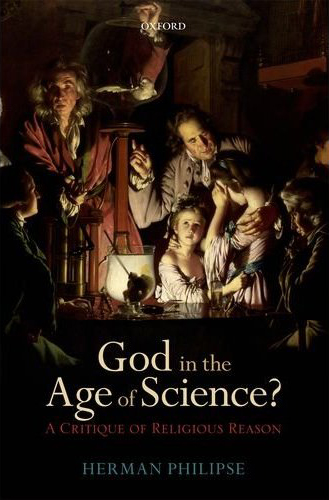
Book Recommendations ♯6: God in the Age of Science?


There are certain books that everyone who is sceptical of theism should probably own. J.L. Mackie’s The Miracle of Theism is perhaps the classic all-in-one overview and critique of the arguments for the existence of God and is well worth a read, but it is dated by now and there are plenty of responses in the literature. Other more recent essential books would include Jordan Howard Sobel’s Logic and Theism, Graham Oppy’s Arguing about Gods, and one of my personal favourites, J.L. Schellenberg’s The Wisdom to Doubt. To that list I would now add Herman Philipse’s God in the Age of Science? A Critique of Religious Reason.

Philipse’s work deals with the existential challenges to theism in the wake of the rise of science. But unlike the more popular books that engage in this task, it does so in a rigorous, thoughtful and patiently philosophical manner. Pitched primarily as a response to the apologetics of Richard Swinburne, the book deals broadly with the factors that motivate contemporary natural theology and the critique thereof. The book is quite technical but it is well-written and generally easy to read. Anyone with an interest in the topic would be encouraged to give it a go.

One of the interesting structural features of the book is how Philipse organises the chapters around the strategic choices faced by the modern theist. As he sees it, these choices arrange themselves along the nodes and branches of a decision tree. At the first node, the believer faces a dilemma. They must ask themselves whether the proposition “God exists” has a truth value or not. That is to say, they must ask whether they are cognitivists or non-cognitivists about God’s existence. If they are cognitivists (as most are) they face a second dilemma: do they think their belief in God is justified on evidential or non-evidential grounds? If they opt for non-evidentialism, they end-up with Plantinga-esque reformed epistemology. If they opt for evidentialism, they face a further dilemma: is the justifying evidence to be drawn from revelational texts, such as the bible, or is it to be drawn from empirical observations of the natural world (Natural Theology)? This decision tree is illustrated below.


With these strategic choices in mind, Philipse divides his book into three main sections. The first section deals, relatively briefly, with non-cognitivism, reformed epistemology and revelation. Non-cognitivism is given the shortest possible shrift, with only a couple of lines dedicated to it in the introduction. This is probably ample since there are relatively few who take non-cognitivism seriously (Wittgenstein being one of the more famous). The possibility of revelation furnishing evidence sufficient to ground belief in God is critiqued and dismissed in a chapter, and Plantinga’s reformed epistemology is given two chapters. This leads to a general defence of the idea that natural theology is really the theist’s best shot. That leads to the second section of the book, which deals with the notion of “Theism as a Theory”, and the third section which deals with the various arguments that Swinburne offers in defence of the existence of God.

I’d be lying if I said I’ve read all of it, but based on what I have read I can heartily recommend this book. Everything I’ve read so far has been illuminating and, in many instances, has encouraged me to think about the arguments in a new way. The chapters on Plantinga, while brief, provided an excellent overview of the theory and as solid a defence of the exclusivism objection to Plantinga’s warrant model of belief as I’ve come across. Likewise, the various chapters on theism as an explanatory theory were excellent and to the point. I particularly liked the chapter dealing with the role of analogy and metaphor in the formulation of the God hypothesis, something I’ve tried to think about myself in the past but not in as careful and rigorous a manner.

There’s lots to chew over in this book, and no doubt plenty to disagree with, but the arguments are clear and their contemplation and dissection is surely one of the joys of philosophy.

Sunday, June 17, 2012

Dougherty on the Parent Analogy and Skeptical Theism


I’ve written extensively about skeptical theism before, but a recent article on the topic caught my eye. It’s entitled “Reconsidering the parent analogy: unfinished business for skeptical theists” and it’s by Trent Dougherty, an excellent philosopher (and theist) working out of Baylor University, a Christian institution in Texas. When he’s not writing a seemingly-endless stream of philosophy articles, Dougherty occasionally writes amusingly cantankerous blog posts over at the Prosblogion.

Despite his theistic commitments, Dougherty’s article takes a skeptical look at skeptical theism, which is probably the most popular contemporary response to the evidential problem of evil. Highlighting a neglected part of the dialectic between atheistic proponents of the evidential argument (like William Rowe and Bruce Russell) and defenders of skeptical theism (like Stephen Wykstra), Dougherty argues that the main analogy used to support skeptical theism — the parent analogy — is seriously flawed.

This post will try to exposit Dougherty’s critique. It is split into three parts. The first discusses the evidential argument and the skeptical theist response. The second looks at the parent analogy and the challenges posed to it by Rowe and Russell. The third part looks at Dougherty’s critique and its implications.


1. The Evidential Argument and Skeptical Theism
The evidential argument from evil holds that the existence of (many) gratuitous evils, though not conclusive proof against the existence of God, certainly raises the probability of his non-existence. A gratuitous evil is defined as an evil which is not necessary for achieving some greater overriding good. The reasoning is that while God might permit evils to occur if they were necessary for achieving a greater good, he would not permit evils to occur if no such necessity were present. Thus, gratuitous evils, if they exist, provide evidence against the existence of God.

But do gratuitous evils actually exist? This is where the evidential argument runs into a spot of bother. To support the existence of gratuitous evil, proponents of the evidential argument must make inferences from cases of seemingly gratuitous evil to cases of actually gratuitous evil. That is, they must infer that if a situation appears to them to be a particular way, then it probably is really that way.

This is an inference that skeptical theists challenge. As Wykstra famously argued, the inference from what seems to be the case with respect to some particular fact to what actually is the case with respect to that fact, is only allowed when we could reasonably expect to have access to evidence that establishes facts of that sort. In other words, Wykstra argues that the key inference in the evidential argument is subject to a condition of reasonable epistemic access (CORNEA for short). He formulates this condition as follows:

CORNEA: On the basis of cognized situation s, human H is entitled to claim ”It appears that p” only if it is reasonable for H to believe that, given her cognitive faculties and the use she has made of them, if p were not the case, s would likely be different than it is in some way discernible by her (from Wykstra 1984, quoted on pg. 2 of Dougherty’s article).

Wykstra then argues that CORNEA is not met in the case of seemingly gratuitous evils:


  • (1) In order for the evidential argument from evil to succeed, the inference from the existence of seemingly gratuitous evils to the existence of actually gratuitous evils must be reasonable. 
  • (2) The inference from what seems to be the case to what is actually the case is only reasonable if CORNEA is met. 
  • (3) CORNEA is not met in the case of gratuitous evils, i.e. if God exists we could not reasonably expect to have epistemic access to the kinds of goods which might justify his permitting the existence of evil. 
  • (4) Therefore, the evidential argument from evil fails.


The notion of CORNEA is not, in itself, particularly troublesome. So the key to this argument is premise (3), the claim that CORNEA fails in the case of gratuitous evils. Wykstra (and others) defend this by using the parent analogy. We turn to that next.


2. The Parent Analogy and its Discontents
The parent analogy works as follows. Sometimes parents allow their children to suffer in ways that ultimately serve the children’s greater good. For instance, they allow their infant children to undergo rounds of vaccinations that can be painful, but are ultimately beneficial (despite what deniers might say). Furthermore, sometimes, due to the age and cognitive limitations of the infant child, the parent cannot disclose to them the reasons that justify their suffering. So, from the perspective of the infant, there does not seem to be any reason for their suffering. But that does not imply that no such reason exists. Thus, CORNEA is not (always) met in the case of infant suffering, due to the cognitive disparity between parent and child.

But, so the defenders of skeptical theism argue, the cognitive disparity between God and human beings is analogous to the cognitive disparity between a parent and an infant child. Thus, just as CORNEA is not met in the case of infant suffering, so too is it not met in the case of gratuitous evil. God may have his reasons for allowing seemingly gratuitous evil to occur and we would have no reasonable expectation of knowing what they were because of our cognitive limitations.

That gives us the following argument in support of premise (3):


  • (5) Parents are sometimes justified in allowing infant suffering (e.g. suffering in order to undergo vaccination) because this suffering ultimately serves the infant’s greater good. 
  • (6) But CORNEA is not always met in the case of infant suffering due to the cognitive disparity between parents and children. 
  • (7) The relationship and cognitive disparity between God and human beings is analogous to the relationship and cognitive disparity between parents and children, in all important respects. 
  • (3) Therefore (probably), CORNEA is not met in the case of gratuitous evils.


Premise (5) seems relatively uncontroversial here so the key to this particular argument lies in premises (6) and (7).

Let’s look at premise (6) first. As critics point out, this premise rightly states that CORNEA is not always met in cases of infant suffering. But this implies that it can be met in at least some such cases. In particular, as Rowe argues, it would likely be met whenever a loving parent had the ability to explain to the child why they had to undergo some temporary suffering. Consider, for example, the case of a four year-old child whose parents had given consent to undergo painful medical treatment (say, chemotherapy). Although there is a cognitive disparity between the parents and the child, the child has some capacity for understanding and, taking advantage of this, the parents would obviously try to explain to them why they had to undergo the painful treatment. Any loving parent would do this. So it is at least possible for CORNEA to be met in these cases.

The possibility of CORNEA being met in at least some cases of infant suffering has a knock on effect on the plausibility of premise (7). If God is a like loving parent, and if God is omniscient and omnipotent, surely he would try to explain to us why there was so much apparently gratuitous evil in the world? Indeed, he could have achieved this relatively easily: by endowing us with cognitive capacities sufficient to grasp the evil-justifying goods that he allows.

As Dougherty points out, this reasoning applies a fortiori to cases of apparently gratuitous human suffering. Why? Because it is the apparent lack of some justifying greater good that amplifies the degree of human suffering. If we thought there was going to be some ultimate payoff for our suffering, we would probably be more stoic about things, but if we are epistemically closed off from such justifying reasons, our torment is augmented.

In effect, then, we have a counter-analogy (and counterargument) which defeats Wykstra’s parent-child analogy.


  • (8) A loving parent would explain to their child, if they had the ability to do so the reasons that justify the child’s undergoing some temporary suffering in order to secure a greater good. 
  • (9) The relationship between God and humanity is like that between a loving parent with the ability to explain justifying goods and a child who had to undergo some temporary suffering in order to secure a greater good (because God is omnibenevolent and omnipotent and because the seeming gratuitousness of human suffering amplifies that suffering). 
  • (10) Therefore, if God exists, God would make known to humans the reasons that justify the existence of seemingly gratuitous evils. 
  • (11) Therefore, CORNEA is met in the case of gratuitous evil.


Responding to this argument, Wykstra offers an extended defence of the parent analogy. We’ll take a look at that, as well as Dougherty’s response to it, next.


3. Dougherty on Wykstra’s Defence of the Parent Analogy
Wykstra tries to defend the parent analogy by drawing a distinction between a morally deep (or obscure) universe and a morally transparent one. A morally deep universe is one in which evil-justifying goods are hard to discover for beings like us. This view of the universe is encapsulated in something Dougherty calls the Obscurity thesis:

Obscurity: If the world is made by an omnipotent, omniscient God, then it is highly likely that if evil is permitted, most of the goods for the sake of which it is permitted will be obscure to humans (p. 4)

This is to be contrasted with a morally transparent universe, which is one in which evil-justifying goods are easily discoverable by beings like us. This is encapsulated in something Dougherty calls the Transparency thesis (he actually calls it the Strong Transparency thesis but he never formulates a weak version so I’ve dropped that qualification):

Transparency: If the world is made by an omnipotent, omniscient God, then it is highly likely that if evil is permitted, the goods for the sake of which it is permitted will usually be transparent to humans.

The key question for Wykstra then becomes: if theism is true, which thesis is more likely? Obscurity or Transparency? Wykstra, unsurprisingly, favours obscurity (though he doesn’t name it as such). And he supports this by way of an extended version of the parent analogy.

The extended version argues that, “given what we actually know about our cognitive limitations” (the wording is Wykstra’s and is significant) it is highly unlikely that God-purposed goods would be transparent to us. This can be seen if we consider the analogous case of parent-purposed goods. According to Wykstra, the transparency of parent-purposed goods to a child depends on the intelligence, ability and goodness of the parent. As those three qualities go up, the more likely it is that the parent will carefully plan for the child’s welfare in the distant future (e.g. post-college and so forth). But, again according to Wykstra, the more the parent-purposed goods lie in the distant future of the child, the less likely it is that they will be transparent to the child.

This reasoning applies a fortiori to God since he has maximal quantities of intelligence, ability and goodness. His evil-justifying goods will probably be realised on a timescale that humans cannot appreciate and hence they are highly unlikely to be transparent. That gives us this rather complex argument in support of premise (3):


  • (12) If, assuming theism and given what we know about our cognitive limitations, the universe is more likely to be obscure than transparent, then CORNEA is not met in cases of gratuitous evil.
  • (13) The universe is more likely to be obscure on theism, given what we know about our cognitive limitations. 
  • (13.1) As a parent’s intelligence, ability and goodness increases, the more likely it is that the suffering-justifying goods for which they act lie in the distant future. 
  • (13.2) The more temporally distant are those suffering-justifying goods, the less transparent they will be to the child who is forced to suffer for their attainment.  
  • (13.3) The relationship between God and humanity is like that between a parent with high intelligence, ability and goodness, and a child (more so because God possesses maximal goodness, intelligence and ability).    

  • (3) Therefore, CORNEA is not met in cases of gratuitous evils.


Dougherty identifies two serious flaws in this argument. The first is in the formulation of premise (12). Wykstra deliberately relativises his argument to what we know about our cognitive limitations. This, in many ways, is what allows him to reach the conclusion that he does. But the whole point of the Rowe/Russell critique was that, given theism, we wouldn’t expect to have such cognitive limitations in the first place. If God really cared about us, like a loving parent cares about their child, he wouldn’t have given us those limitations. So to relativise the argument in this way is to miss the point of critique.


  • (14) The argument cannot be relativised to our current cognitive limitations because we wouldn’t expect to have those limitations if theism was true.


The second flaw lies in the revised version of the parent analogy, particularly in the appeal it makes to temporally-distant parent-purposed goods. As Dougherty points out, the temporal distance between the suffering/evil and the good for which it is necessary is irrelevant from the perspective of transparency. Whether the goods accrue in the distant future, or not, doesn’t necessarily make them obscure. Furthermore, it is the very qualities of God that allow him to plan for us on a cosmic scale (omnipotence etc.) that also make it more likely that he would make this a morally transparent universe.


  • (15) Temporal distance is irrelevant to transparency: the very traits that make it more likely for someone to plan for future goods make it more likely that they would make those future goods transparent.


So extended version of the parent-analogy is seriously flawed.


4. Conclusion
That brings us to the end of Dougherty’s critique. To recap, skeptical theism is the preeminent modern response to the evidential problem of evil. The parent analogy is the preeminent (indeed, only) defence of skeptical theism. According to this analogy, we have no reason to expect epistemic access to evil-justifying goods because: (a) the cognitive disparity between humans and God is akin to that between parents and children; and (b) parents sometimes inflict suffering upon their children for good reason, but those reasons are not accessible to the child.

This analogy has been challenged by Rowe, Russell and, now, Dougherty. According to these critics, the analogy fails because it ignores the fact that a loving parent with the ability to explain suffering-justifying reasons to their children would indeed explain those reasons to their chld. God is more like a loving parent with the ability to explain than like a loving parent without that ability. This holds despite Wykstra’s attempts to defend the parent analogy.

This conclusion has significant implications for the skeptical theism debate. As Dougherty notes, many critics of that doctrine focus on its super-structural features. In particular, they focus on the effect that the underlying skeptical principles may have on our other beliefs. I have pursued this kind of criticism myself in the past. But the parent analogy is the foundation of the whole doctrine. If those foundations are fundamentally flawed, then the super-structural problems are beside the point: skeptical theism doesn’t even get off the ground.

Friday, June 15, 2012

Posts on the Ethics of Same-Sex Relations


I have written a number of posts about the ethics of same-sex marriage and same-sex relations. Mainly looking at the work of John Corvino, but with one other post on the impeded-function argument. Anyway, here are links to all the posts I have published on this topic.


1. The Impeded Function Argument against Gay Sex


2. Corvino on the PIB (Polygamy, Incest, Bestiality) Argument


3. Corvino on the Definitional Objection to Same-Sex Marriage


Thursday, June 14, 2012

Corvino on the Definitional Objection to Same-sex Marriage (Part Three)


(Part One, Part Two)

This is the third part in my series of posts on the definitional objection to same-sex marriage. The series is working off John Corvino’s contribution to the book Debating Same-sex Marriage. Corvino is an ethical philosopher working out of Wayne State University. In this book he takes on the conservative writer and defender of traditional marriage, Maggie Gallagher, in a point-counterpoint debate.

The definitional objection to same-sex marriage might be better termed the ontological objection since it focuses on what marriage essentially is. Most important from the perspective of those who would defend the argument is the notion that whatever marriage essentially is, it is essentially not a same-sex union. This conclusion is defended in a variety of ways. In part one, we discussed the Argument from Tradition, which does what you would expect. In part two, we discussed the Definitional Argument, which looks at the normative weight of definitions. Both were found to be flawed.

One of the conclusions we reached in part two was that, despite some countervailing considerations, the labels which we apply to states of affairs do not normally carry much normative weight. Thus, it is difficult for a purely definitional argument to force the conclusion that same-sex marriage is impermissible. To reach that kind of conclusion one must look into the actual states of affairs themselves and determine whether they are intrinsically or instrumentally valuable, and then work back to the conclusion that the definitional label we apply to those states of affairs ought not to be expanded to cover structurally distinct states of affairs.

The argument we’re going to look at today — the New Natural Law Argument — tries to follow that pattern. It offers an account of the ontology of marriage; it attaches special normative significance to that ontology; and it then uses this to exclude the possibility (and permissibility) of same-sex “marriage”.


1. The Conjugal View of Marriage
Under the old natural law, normative value was attached to natural function (note: I’m not entirely sure that this is correct, I suspect Aquinas apologists will tell me he had a more nuanced view). Accordingly, if the natural function of X was to do Y, then any activity that frustrated or impeded X in doing Y was prima facie wrong. This kind of principle could easily be used as the basis for an argument opposing same-sex marriage, indeed it could be used to oppose same-sex relations of any kind. I have covered the problems associated with such arguments before.

New natural law — the moral theory associated with the likes of John Finnis and Robert P. George — takes a slightly different view of things. According to this view, there is a set of basic human goods, the promotion and honouring of which is prima facie good. These basic goods are plural, irreducible and self-evident. To give an example, Finnis claims that knowledge is a basic self-evident good. Why is it self-evidently good? Because it would be perverse, inconsistent and self-defeating to deny its goodness: someone who claimed that it was bad to know P would have to know P in the first place before they could deny its goodness. Following similar though slightly less persuasive reasoning, Finnis identifies a list of other basic goods including friendship, play, life and religion (understood in the secularised sense of “asking the big questions about life, the universe and everything”).

Tellingly, Finnis has recently added a new basic good to his list: the marital good. The marital good is again basic, irreducible and self-evident. It is achieved through a particular kind of comprehensive union between a male and a female. Corvino does a pretty good job of summarising this view so I’ll hand things over to him:

As a comprehensive union, marriage unites the partners along multiple levels, which reinforce each other. On the mental/volitional level, it requires a loving, permanent, exclusive commitment between the spouses. On the physical level, it requires that the spouses unite biologically in reproductive-type acts. In such acts the male and the female become “literally, not metaphorically, one organism.” [Footnote omitted] (pg. 35)

This comprehensive-union view is sometimes referred to by proponents as the “Conjugal View” of marriage. And although there is often talk of achieving multi-level union between the partners, it is clear that (ongoing) engagement in reproductive-type acts is the essential characteristic of this type of union. After all, it would be possible for a same-sex couple to commit to one another on the mental/volitional level. Likewise, it would be possible for them to engage in sexual acts that allow them to achieve some form of bodily union. It is merely the fact that they cannot engage in reproductive-type acts that excludes them from the category of marriage. Furthermore, it is these acts that make marriage the basic good that it is: without them other types of good might be achieved (e.g. friendship, play), but they will not be the marital good.

That gives us the following argument against same-sex marriage:


  • (1) The marital union is a basic good: it is a comprehensive multi-level union between a man and a woman, involving ongoing reproductive type acts. 
  • (2) Unions between same-sex couples cannot involve ongoing reproductive type acts.
  • (3) Therefore, unions between same-sex couples cannot be marital.


Now this argument doesn’t claim that same-sex relations are impermissible, or that they cannot be accorded some kind of legal and social recognition — additional argumentation would be needed for that — rather, this argument claims that same-sex unions should not be afforded the same type of legal and social recognition as marital ones.


2. The Sterility Objection
The standard objection to the New Natural Law Argument is the sterility objection. I like to look on this as a challenge to the supposed basicality and goodness of the conjugal view of marriage (though not necessarily to the idea of a marital good). It works off a counterexample which runs follows: imagine a sterile heterosexual couple (i.e. a couple whose sexual acts cannot result in conception). Clearly, such a couple cannot engage in reproductive-type acts. But sterile couples can be married. So the conjugal view of marriage must be wrong.

To put this more formally:


  • (4) According to the conjugal view, if a couple cannot engage in reproductive type acts, they cannot be married. 
  • (5) Sterile couples cannot engage in reproductive-type acts. 
  • (6) Therefore, according to the conjugal view, sterile couples cannot get married. 
  • (7) But sterile couples can get married. 
  • (8) Therefore, the conjugal view must be wrong: reproductive-type acts are not essential to marriage.


For some reason, I always think the plausible response to this argument — for the proponent of the natural law view — is just to bite the bullet and accept that sterile couples cannot be “married”. The reason I think this is plausible is that it seems to comport well with the views of some natural lawyers — particularly Finnis — who object to other non-reproductive sexual acts like masturbation, oral sex, anal sex and so forth. But for some reason they tend not to take this view. Obviously, they find the suggestion that sterile couples cannot get married to be far too objectionable.

So how do they respond? Well, the preference seems to be to challenge premise (5) by arguing that, contrary to what we might first think, sterile couples can indeed engage in reproductive type acts. The use of the term “type” is key here. Using cutesy analogies — such as: it’s still baseball even if you don’t win — such respondents will point out that a particular act token can fall within the boundaries of a general act type, even if that particular token does not realise or fulfil the end usually associated with that act type.

Corvino quotes the following example of this response from the work of Girgis, George and Anderson:

When Einstein and Bohr discussed a physics problem, they coordinated intellectually for an intellectual good, truth. And the intellectual union they enjoyed was real, whether or not its ultimate target (in this case, a theoretical solution) was reached — assuming, as we safely can, that both Einstein and Bohr were honestly seeking truth… …by extension, bodily union involves mutual coordination toward a bodily good — which is realized only through coitus. And this union occurs even when conception, the bodily good toward which sexual intercourse as a biological function is oriented, does not occur.

We can formalise the reasoning here as an argument from analogy, which directly attacks premise (5):


  • (9) Two scientists coordinating intellectually so as to obtain the truth can successfully engage in the act-type “pursuing truth” even if the truth is not ultimately attained. 
  • (10) The case of a sterile couple coordinating their bodies so as to achieve sexual union is similar to that of the two scientists in all important respects. 
  • (11) Therefore, a sterile couple can engage in reproductive type acts, even if reproduction is not ultimately attained.


The problem with this formalisation is that it’s a fudge. One has to paper over many important differences between the two scenarios to make it sound even vaguely persuasive. As Corvino points out, it may be true that Einstein and Bohr are effectively engaging in the act type “pursuing truth” (i.e. they are coordinating on an intellectual good) even if truth is not obtained, but that’s only because they are honestly intending to seek a goal that simply does not occur. Perhaps it does not occur because of their cognitive limitations, or because others have conspired against them. Whatever the reason, it is their honest pursuit of it that allows us to say they actually engaged in that act type. But this throws into immediate relief some significant differences in the case of the sterile couple. If the couple know that they are sterile — e.g. if the woman has had her uterus removed due to cancer — then there’s no way that they can honestly pursue the goal of reproduction. And so it would seem to follow that they cannot perform reproductive type acts.

To put this formally (structured as a defence of (5))


  • (12) If an act type T is characterised by activity that is oriented towards some end E, then a person can only be said to engage in T if they engage in activities that can result in E, and they knowingly and honestly intend to attain E. 
  • (13) The reproductive act is characterised by coordinated bodily activity between two persons that is oriented toward conception. 
  • (14) A sterile couple cannot knowingly and honestly intend to conceive. 
  • (5) Therefore, a sterile couple cannot engage in reproductive type acts.


The principle motivating this argument (premise (12)) is somewhat ad hoc, drafted as it was purely in light of Corvino’s reaction to the analogy proffered by Girgis, George and Anderson. But it seems reasonable enough. To say that mental states like knowledge and honesty can be part of the success conditions for the performance of certain act types seems normal enough.


3. The Paraplegic Case
Proponents of conjugal view might respond by rejecting the honest and knowing success conditions. In other words, they could argue that an act is of the reproductive type as long as: (a) there is uncontracepted sexual intercourse (with ejaculation maybe being necessary); and (b) irrespective of the intentions and knowledge of the parties engaging in the act. Furthermore, they could argue that this is enough to make the act intrinsically morally valuable.

This, however, seems absurd to me: the mental states of the parties are clearly relevant to determining the moral status of the sexual act. What if the act was non-consensual? Surely then it would be prima facie wrong? Indeed, even proponents of the conjugal view recognise something like this point when they identify mental/volitional union as being part and parcel of marital unions.

But even if they could overcome this problem, unpalatable consequences would follow. As Corvino points out, proponents of the view would then have to accept that certain paraplegics could not marry. Unlike sterile persons, paraplegics who lack the use of their reproductive organs, cannot even engage in reproductive type acts. Thus, they cannot satisfy the essential condition of the conjugal view. But surely it is absurd to deny that they cannot be allowed to marry, or that their marriages should no longer be legally recognised? So thinks Corvino at any rate.

Although Corvino thinks that proponents of the conjugal view are logically forced to this conclusion, he thinks they will try to avoid it. In particular, he suggests that they might appeal to the value of privacy or autonomy in rejecting state interference in paraplegic “marriages”. But if they did so it would be a spectacular concession. Proponents of same-sex marriage could use similar reasoning to support non-interference in same-sex “marriages”.

Thus ends Corvino’s basic critique of the New Natural Law Argument. There are other reasons for rejecting, ones that Corvino discusses elsewhere and that I have covered before, and also ones that other philosophers have raised. But we’ll leave it there for now.


4. Conclusion
Okay, that brings us to the end of this series. To sum up, the definitional objection to same-sex marriage holds that same-sex marriage is, in effect, an oxymoron because it contradicts the essence of marriage. Three forms of the definitional objection have been considered here: the Argument from Tradition (AFT), the Definitional Argument (DA), and the New Natural Law Argument (NNLA).

The AFT was deemed to be flawed because it assigned unwarranted normative weight to traditional institutions, even in its most sophisticated Hayekian form. The DA was deemed to be flawed because it assigned unwarranted normative weight to the labels we assign to certain states of affairs. And the NNLA was deemed to be flawed because it assigned unwarranted normative weight to reproductive type acts.